We’ve all seen them on TV: a tense person hooked up to a machine, sweating bullets, and the examiner calmly asking questions while numbers dance across the screen. But let’s be honest—real life isn’t exactly like Lie to Me or any crime show you binge on Friday night. The polygraph test, often called a lie detector, is both more mundane and more mysterious than the dramatic portrayals suggest.
I’ve been around people who’ve taken them, watched the nervous pacing, and seen how even the most confident folks start second-guessing themselves under those wires. So, what’s really going on during a polygraph test? How reliable is it? And, more interestingly, what does it feel like to sit in that chair while someone probes your honesty?
The Setup: More Anxiety Than Machinery
Walking into a polygraph test room is like stepping into a dentist’s office if the dentist were part FBI agent, part psychologist. There’s a chair, a desk, a small tangle of wires, and the examiner. You might not even notice the subtle gauges and sensors at first, but your body will.
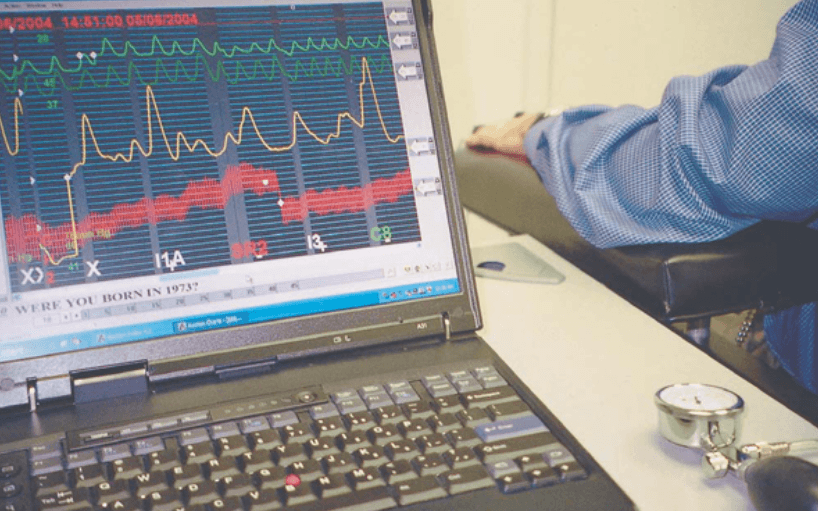
Here’s the thing: the polygraph doesn’t detect lies directly. It measures physical responses—heart rate, blood pressure, respiration, and skin conductivity—that tend to change when a person is under stress. So when the examiner asks, “Did you take the missing money?” it’s not a magic truth machine lighting up. It’s tracking how your body reacts, and your body reacts strongly when you’re nervous…even if you didn’t take the money.
I remember a friend describing their first test: “I wasn’t lying, I swear, but my hands were sweating, my heart was racing, and I felt like I was about to pass out. Just sitting there, breathing weird, made me look guilty.” That’s the human element that makes polygraphs so tricky—and so fascinating.
How the Questions Work
Polygraph tests aren’t just a random barrage of “Did you lie?” questions. There’s a strategy behind every question, and it starts long before you sit in the chair. Examiners spend time talking to you first, explaining the process, and sometimes even asking harmless questions to see how your body naturally reacts. These are called “baseline” questions, and they’re crucial because the machine compares your reactions to these neutral moments.
After that, the real test begins. The examiner usually mixes relevant questions—things that matter to the case—with control questions that are emotionally loaded but unrelated. Here’s a small scenario: imagine you’re asked, “Have you ever lied to a friend?” That’s a control question. Then comes the pivotal one: “Did you steal the company laptop?” The idea is to see if your response to the critical question spikes compared to your baseline.
And yes, it’s uncomfortable. A lot of people underestimate how exhausting it is to have someone scrutinize your heartbeat and breathing while you try to sound casual. One former examiner I spoke to said the toughest part isn’t the equipment—it’s reading the subtle cues in human behavior, because the body can betray you in tiny, almost invisible ways.
Myths and Misconceptions
Let’s clear something up: polygraphs are not 100% accurate. People tend to imagine them as infallible, like a digital lie light. Reality is messier. Stress, fear, or even certain medical conditions can cause false positives. Conversely, practiced liars—or people with unusual physiological responses—can sometimes “beat” the test.
A story I often hear from HR departments is about an applicant who passed a polygraph with flying colors, only to be caught embezzling months later. On the flip side, a nervous intern might fail a test even if they’ve done nothing wrong, simply because their body reacts strongly to the pressure. That’s why, in most legal systems, polygraph results are treated as supplementary, not definitive evidence.
Here’s another myth: polygraphs can read your mind. Nope. They only detect physiological changes. Your clever story or rehearsed answers can influence the results, but they’re not foolproof. And yes, some people think they can “trick” the machine by biting their tongue or controlling their breathing. Experienced examiners often catch that, but it’s not a guaranteed shield.
The Psychology Behind It
What’s fascinating is the psychological layer. Humans are hardwired to react to perceived judgment, and the polygraph exploits that. The moment someone focuses on your honesty, your body becomes a stage for stress. Heart rate rises, palms sweat, and even your breathing patterns shift. It’s subtle but measurable.
I remember interviewing a detective who said, “Most people fail a polygraph because they panic, not because they lie.” Think about that. It’s not a test of morality; it’s a test of nerves. Some people can sit through a stressful interview and appear calm, while others with nothing to hide might look guilty just because their anxiety spikes.
This is why preparation can be as mental as physical. Some candidates practice controlled breathing, visualization, or calming techniques to keep their responses steady. But even then, the human element is unpredictable. You can rehearse, but the instant the questions hit home, your body might still betray you.
Different Types of Polygraph Tests
Not all polygraphs are created equal. There’s the classic “control question test” (CQT) I mentioned earlier, which compares responses to relevant and irrelevant questions. Then there’s the “guilty knowledge test” (GKT), which focuses on whether the person recognizes details only a guilty party would know.
In practical terms, that might mean showing someone multiple pictures of crime scene items and watching their physiological response. Recognition spikes certain signals. It’s less about “Did you do it?” and more about “Do you know this?” Some law enforcement agencies prefer GKT because it can be more objective, but it requires specific knowledge that’s unique to the crime.
Why People Take Polygraphs
You might wonder, why would anyone volunteer for a test that basically measures your stress and honesty? The reasons vary. Some take it for jobs in law enforcement or intelligence. Others face it in legal disputes or investigations. And, occasionally, it’s used in personal situations—think couples’ therapy or parental concerns (though that’s a bit more controversial).
A friend once told me they had to take one for a security clearance. They weren’t worried about lying, but the experience left them jittery for hours afterward. “It’s weird,” they said, “because you’re being judged by numbers, not people, but it feels like the whole room knows if you’re hiding something.” That’s the unique tension of a polygraph: the machine itself is impartial, but your mind interprets it as judgment.
The Debate Over Accuracy
Let’s not sugarcoat it: polygraphs have critics. Many scientists argue that physiological responses are too unreliable to declare someone a liar. Stress, caffeine, fatigue, or even personal anxiety disorders can skew results. Legal systems reflect this skepticism; in many countries, polygraph results are inadmissible as primary evidence in court.
Yet, polygraphs persist. Why? Because even with limitations, they can be effective in certain contexts. They act as psychological leverage, encouraging honesty or prompting confessions. In corporate investigations, they sometimes help clarify facts when other evidence is inconclusive. It’s less about absolute truth and more about influence.
Here’s the thing: if you think of it as a tool rather than a crystal ball, it makes more sense. It’s like a thermometer. It won’t tell you why you’re sick, but it signals that something is off. The polygraph signals stress, and it’s up to humans to interpret what that stress might mean.
What It Feels Like to Be Tested
If you’ve never been in one, imagine this: you’re sitting in a quiet room, wires attached to your chest, arms, and fingers. The examiner asks questions calmly, almost conversationally. Your heart races. You start overthinking every answer. Even harmless questions suddenly feel loaded.
Some people describe it like being trapped under a microscope. Your mind screams, “Just relax!” while your body refuses to cooperate. Others report an odd hyper-awareness, noticing every tiny sound, the click of the machine, the examiner’s pen scratching on paper. Time stretches. Ten minutes can feel like an hour.
For the lucky ones, it’s uneventful—they answer questions and leave with barely a blip. But for the nervous or stressed, it’s a vivid reminder of how much our bodies betray our minds.
The Takeaway
Here’s what I’ve learned from talking to examiners, participants, and skeptics: polygraph tests are fascinating but flawed. They’re a window into human physiology and psychology, not a definitive truth detector. They can intimidate, reveal stress, and sometimes nudge people toward honesty—but they aren’t magic.
If you ever find yourself in a polygraph room, remember this: breathe, stay calm, and don’t panic over every spike your body makes. The machine is just measuring reactions, not moral worth. The tension comes from within, not from the wires or dials.
At the end of the day, the polygraph is as human as the people who use it—messy, unpredictable, and occasionally illuminating. It tells a story, not the absolute truth, and sometimes the story itself is worth paying attention to.